

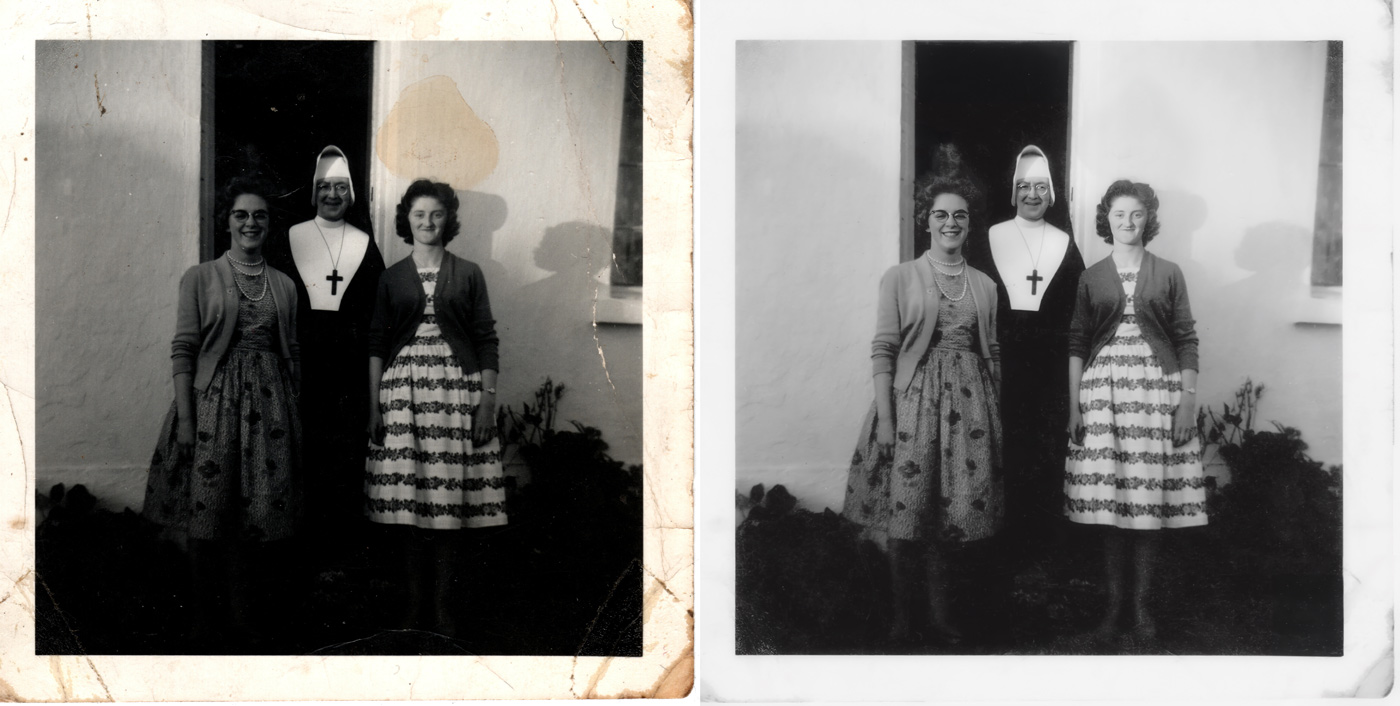
Photo restoration for family history isn’t about rewriting the past, it’s about making old family photographs readable, recognisable, and meaningful again. There’s something quietly powerful about an old family photograph. It might be the only image of a great-grandparent, a wedding day frozen in time, or a group of faces whose names are half remembered but deeply familiar. These photos aren’t just pictures; they’re emotional anchors. They help us recognise where we come from in a way that no document ever quite can.
But many of these images haven’t survived kindly. They’re faded, cracked, stained, torn, or blurred by time. Often they’re tucked away in a drawer or box because looking at them feels more frustrating than meaningful. This is where careful photo restoration can gently change everything.
Restoring a photograph isn’t about making it modern or perfect. For me, it’s about making the person in the picture feel present again.
What Photo Restoration Really Is and Why It Matters for Family History
At its core, photo restoration is preservation. It may involve repairing damage, correcting fading, improving contrast, or carefully sharpening detail so that faces and expressions can be seen clearly again. The goal is not to rewrite history or impose modern aesthetics, but to respect the original photograph and the moment it captured.
Every photograph is different. Some need very little work, perhaps just a light adjustment so the image reads properly to the modern eye. Others require more time and patience, particularly when the surface has been badly damaged or sections are missing.
What matters most is judgement. Knowing when to stop is just as important as knowing what can be improved.
A Thoughtful Approach to AI
There’s a lot of talk about AI photo restoration at the moment, often promising instant transformations at the click of a button. While these tools can sometimes be useful, they’re not a universal solution, and they’re certainly not appropriate for every family photograph.
In most cases, I don’t need to use AI at all.
Overuse of automated tools can smooth away real faces, invent details that were never there, and strip photographs of the very character that makes them meaningful. I see these photos all over the internet these days. Eyes become generic, expressions change, and something subtle but important is lost.
I may use AI selectively when a photograph is extremely degraded and key features are genuinely missing, but even then it’s applied carefully and followed by manual work. The photograph always leads the process, not the technology. My priority is that, when someone looks at the restored image, they still recognise their relative.
Before and After: What Restoration Can Do
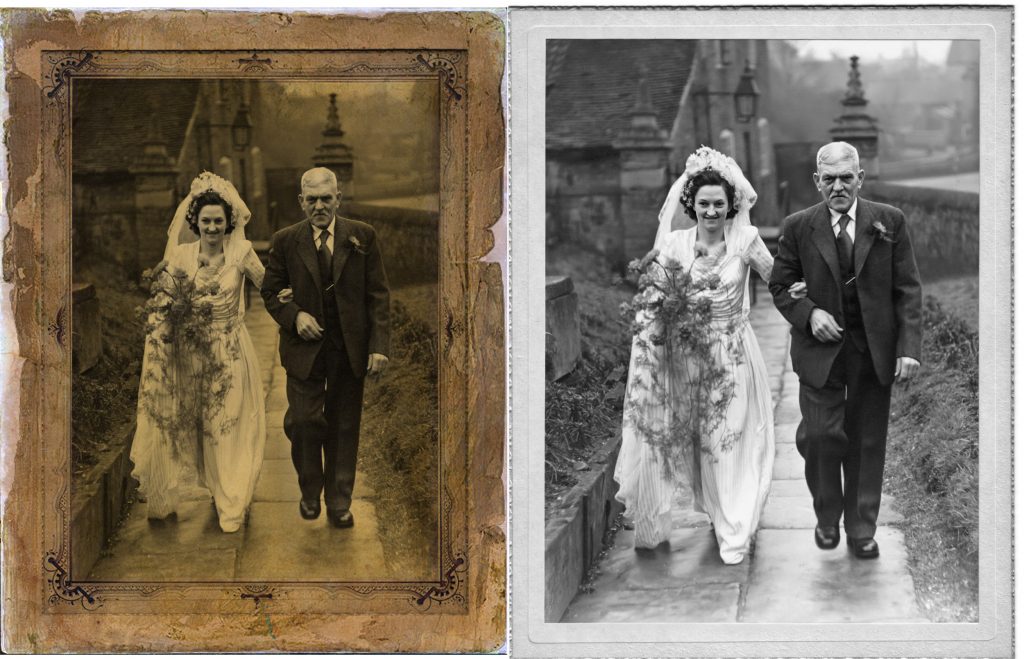
One of the most powerful ways to understand restoration is through comparison.
A faded wedding photograph from 1949, for example, may initially appear flat and lifeless. After careful restoration, the details emerge: the texture of the dress, the expressions on faces, the architectural background of the church. Nothing is exaggerated or invented, the image simply becomes legible again.
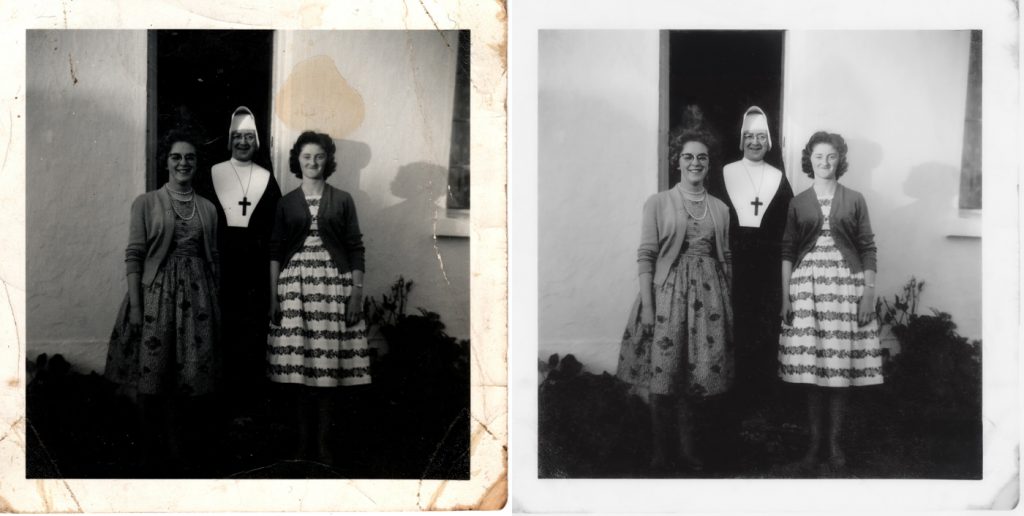
In other cases, a small studio portrait might have deep cracks across the surface or missing corners. Repairing that damage doesn’t erase the past; it protects it, allowing the photograph to be shared, framed, and passed down rather than hidden away.
These changes often feel small technically, but emotionally they’re enormous.
Why Restored Photos Matter to Family History
Photographs often act as gateways. A restored image sparks recognition, conversation, and memory in a way few other records can. Children and grandchildren who might skim over names and dates will pause when they see a face. They ask questions. Stories surface. Connections deepen.
In genealogical research, photographs frequently sit alongside documents, letters, newspaper clippings, and certificates. Together, they transform a family tree from a list of facts into a lived narrative. Restoration helps photographs reclaim their rightful place in that story.
When Photo Restoration Is Especially Valuable
Photo restoration can be particularly meaningful when you’re dealing with:
- Wedding photographs
- Military portraits
- Studio images of ancestors with no surviving relatives
- The only known photograph of someone
- Images damaged by storage, damp, or age
These are often the photographs families feel most nervous about touching and the ones that benefit most from careful, respectful work.
Bringing Images Back Into Family Life
The most rewarding part of restoration for me isn’t the technical process; it’s what happens afterwards. A photograph that was once too damaged to display becomes framed on a wall. A long-ignored album is opened again. A face connects across generations.
If you have an old photograph you avoid looking at because it feels too broken, it may still hold more than you think. With the right approach, it doesn’t need to become something new, it simply needs the chance to be seen again.
If you’d like to talk about a photograph or explore whether restoration is possible, you’re very welcome to book a free 30-minute call with me. There’s no pressure and no obligation, just an honest conversation about what’s achievable and what will best honour your family’s history.
Let’s bring those images back into view.
Leave a Reply